Showing posts with label Element 6: Social Action. Show all posts

Thursday, November 13, 2025

Sometimes People March


Sometimes People March
 Written and illustrated by Tessa Allen
Social Justice Element 6: Social Action

Summary:
The story of the book follows a diverse group of people, as well as all the different reasons why those people have marched in the past and may want to march for any reason in general. It shows that when people come together, they can make change, and that change can inspire others to do the same, as well as to resist injustice together and spread hope. It tells the importance of listening to others' stories as well as sharing your own to come together and stand for what is right.

Social Justice Aspect:
This book demonstrates social justice element 6 because it directly encourages children to take a stand, march for the change they want to see in the world, take action, and stand up for what is right. It ties into the social justice aspect because it identifies an issue, organizes how to handle it, and marches for it, actively protesting and protecting what is right.

Activity:
This book can be used to teach grades 3-5, and an activity I would create based on this book is that I would have my students write letters to their town or city explaining a change they want to see where they live and protesting for it. Whether that is them protesting that recycling should be more enforced where they live, or an event they think would help others, such as a food drive or donations.

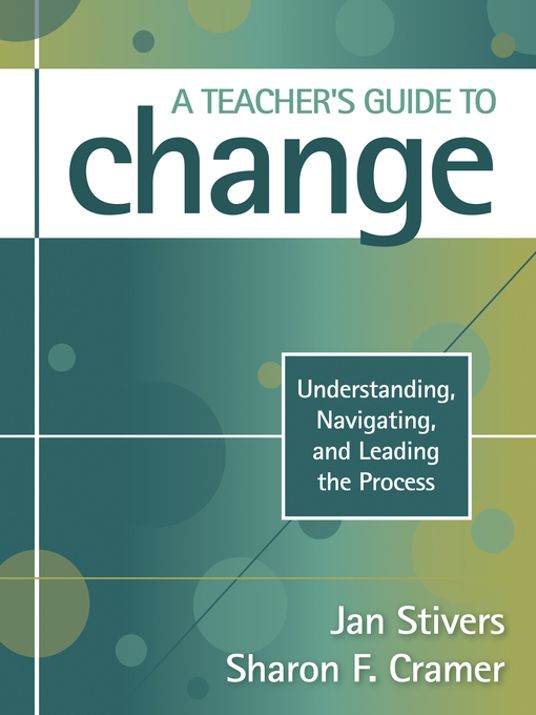


A Teacher's Guide to Change

 Book: 'A Teacher′s Guide to Change'. Cover image.


                                                            A Teacher's Guide to Change

                                                            Written by Jan Stivers and Sharon F. Cramer 

                                                            Where to Find Book

 Summary:
A Teacher’s Guide to Change is a resource for teachers in grades K–12. It teaches educators how to foster change in their schools. It includes surveys from over 100 teachers, reflections, step by step plans to implement change in and out of the classroom, and gives other resources to aid teachers. 


Element 6: Social Action

This book is Element 6 because it clearly details how teachers and students can get involved in social change, with teachers guiding their students into making meaningful changes in their communities.


Review of the Book: Here


No Voice Too Small


No Voice Too Small
Written by Lindsay H. Metcalf, Keila V. Dawson, and Jeanette Bradley
Illustrated by Jeanette Bradley
Social Justice Element 6: Social Action

Summary: 
No Voice Too Small is a compilation of poems honoring 14 young American activists who rallied for change to be made in their communities. These activists advocated for a wide variety of issues of social justice that young people across the country and beyond face, from environmental rights, like those Jasilyn Charger advocated for--believing everyone deserves clean water--to LGBTQ+ rights, racial justice, mental health matters, and more. Across the 14 instances it narrates on, it showcases youth's ability to inspire change.

Social Justice Aspect: 
This book showcases how young people are able to rally social change and social action starting with just their own unique voice and perspective. With the 14 young activists it highlights, it demonstrates precisely how and why these young people were able to inspire the social action that they did--across a broad spectrum of issues that young people experience and are impacted by. By highlighting figures like Marley Dias who, as a young African-American 6th grader, started the successful #1000BlackGirlBooks campaign for more black female protagonists in children literature, young readers are able to be emboldened to inspire the change and social action they desire in their own communities.

Classroom Use:
I think this picture book would be compelling for elementary school students from 1st through 5th grade, though the supplementary class material would need to be adjusted based on grade level. A lesson that could be based off of this book is having all the kids share a topic of social injustice they are passionate about, helping them find and research their topics as is age appropriate, and then having all the kids presenting either something they would like to do to inspire social change relevant to that topic, or what movements have taken place in the past that gives us the justice/representation/solution/etc. we have today.

Teacher Resource: 
The "Meet the Artist" worksheet included in this activity guide could be used for the lesson I described. This resource also includes other activities related to the topics in this book and teaching social action. 
  

Friday, November 7, 2025


Peaceful Fights for Equal Rights

Author: Rob Sanders
Illustrator: Jared Andrew Schorr

Element 6: Social Action


Purchase Link:

https://bookshop.org/p/books/peaceful-fights-for-equal-rights-rob-sanders/d9f375b26c71e6da?ean=9781534429437&next=t

Summary 

Peaceful Fights for Equal Rights is a picture book about peaceful protests, sit-ins, and demonstrations. As they demonstrate with simple A–Z actions like “Assemble,” “Listen,” “March,” and “Vote,” the book shows that activism can be peaceful, creative, and inclusive, even for children. With bold paper-cut-out illustrations and powerful verbs, it demonstrates that social change occurs when people work together. This children's book offers a gentle, child-friendly plan for how we can all participate in movements as they work to make the world fairer and more just.

Element 6- Social Action

This book is a great example of Element 6, as it teaches children exactly how to address the issues that face their communities. Instead of just pointing out a problem, the book suggests practical, age-appropriate ways to take action, such as writing letters, creating signs and banners, marching in protest, organizing groups or demonstrations, speaking up, and spreading awareness. It presents children as powerful agents of change, demonstrating how peaceful actions can have a profound impact. It’s about doing, participating, and using your voice – which aligns with Element 6. It’s about getting students to practice the skills they will use themselves. 

Classroom Activity

The lesson objective is for students to learn what it means when people work together to effect positive change in their school. I would read this book to a 2nd–5th-grade classroom during a social justice or civics unit. Afterward, students would select a cause they care about, such as books for playgrounds, lunch options, environmental stewardship, or community kindness, and plan a small social action project using the book’s actions to write down their own idea for an A–Z project as a class. Students could produce protest signs, compose letters to the principal, launch a kindness campaign, or post short videos encouraging their classmates to support their cause. This provides students with the opportunity to practice activism in a safe and meaningful manner.

Guide with activities and lesson ideas for Peaceful Fights for Equal Rights:

https://www.robsanderswrites.com/_files/ugd/bdf277_cef1e7320a47404090188ff394d88737.pdf


Thursday, September 26, 2024

Malala’s Magic Pencil


Title: Malala’ Malala’s Magic Pencil s Magic Pencil

Author: Malala Yousafzai <--- Click here for malala.org!

Illustrator: Kerascoët

Genre: Auto-Biography 

Grade level: Grades 3 - 5

Summary: Malala’s Magic Pencil tells the story of young Malala Yousafzai, who dreams of having a magic pencil to solve problems and make the world a better place. She imagines using it to erase poverty and bring peace. As she grows up, she realizes there’s no magic pencil—but she can still create change with her voice. By speaking out for girls' education and human rights, Malala becomes a strong advocate for change. This beautifully illustrated book makes her story easy for younger readers to understand and shows how Malala held onto hope, even in tough times.

Element 6: Social Action: This book shows how anyone can take social action, like Malala did when she stopped dreaming of change and started working for it. It teaches kids that even young people can make a difference in their communities by speaking up for what’s right. Malala’s journey inspires students to recognize issues around them and to have the courage to act. It’s a reminder that change doesn’t come from magic but from determination and using your voice.

Activity/Action: I would use Malala’s Magic Pencil in a lesson about advocacy and social justice. After reading, students could think of problems in their school or community they care about. They would brainstorm ways to take action—like starting a campaign, writing letters, or planning events. This activity would encourage them to become advocates, much like Malala, by raising awareness and making a real effort to solve the problems they’re passionate about.

Malala’s bravery and dedication to education and equality set a powerful example of what it means to stand up for change. The story, paired with Kerascoët’s vivid illustrations, is relatable for young readers and offers a clear message about the importance of standing up for what’s right. It’s also a great way to start conversations about education and how students can make a difference in their own lives.

Additional recourses:


More than Peach


More than Peach 
Author: Bellen Woodard 
Illustrator: Fanny Liem 
Grade Level: K-2

Summary: 
    As Bellen is at school and her friends call the peach crayon "the skin color" crayon, something just didn't feel right for her. While she begins to talk about this feeling with her mother and the language surrounding the "skin color" crayon, she develops a brilliant idea. Instead of passing the brown color crayon to match Bellen's skin color, as her mother suggested, she came up with the idea of asking what color her friends would like since skin color can be any of the beautiful colors. The next day at school, Bellen decided to put her idea to the test! After her friend asked her to pass "the skin color" crayon, she asked, "Which one? Skin can be any number of beautiful colors". When her friend replied to her question by asking for the peach crayon, and her other friends in her classroom were just as specific when they needed a "skin color" crayon, Bellen had such a proud look on her face. As the new language began to circulate through the school, Bellen wanted to make a change in other schools as well. Putting her pen to paper, she came up with a plan, engaging her school, family, friends, and the rest of her community to help spread the new language around crayons and how we are "more than peach". Bellen's words circulated through the world, as she created the More Than Peach Project, and became the World's 1st Crayon Activist. 

Element Six (Social Action): 
    Although I believe that Bellen Woodard's More than Peach embodies several elements, I think that element six, social action, is the major theme in this book. Bellen, being a Black child, did not feel right when the "skin color" crayon was the peach crayon because for her, her "skin color" crayon was not peach. As she unpacked her feelings and saw the change that she can make in her school, she knew that she could make a change in the world. And she did just that! She wanted everyone to know that they are more than just peach, that they are valuable, and the space that they are in should value them as well by considering everyone. She noticed a problem, came up with a solution, and made a change.

Activity: 
    After reading this book with my students, and discussing the ways in which Bellen used her voice to be an advocate for change, I would explain to my students that they can be advocates as well. We can discuss and think about an important message that considers diversity or inclusion, and each student can create posters with our important messages. Once completed, we can hang them up and go around the room, and  admire each other's posters with their important messages and drawings. We can even invite other classes to take a look at our gallery of posters, and discuss the impact that our words and messages have on us, and how we can be advocates no matter what age. 


Wednesday, September 25, 2024

Stand Up and Speak Out Against Racism


The cover picture for the book, Stand Up and Speak Out Against Racism. A red background with yellow, red, and white text stating the title of the book. There are five children of diverse backgrounds pictured in protest, one holding a megaphone, one holding a fist in the air, and the other three holding banners.


Stand Up and Speak Out Against Racism

Author: Yassmin Abdel-Magied
Illustrator: Aleesha Nandhra
Genre: Nonfiction
Grade Level: 4th - 8th

Summary
    With the aim of teaching kids about racism and how to combat it, Yassmin Abdel-Magied toured schools around the UK, polling students for their thoughts and opinions on race and racism. Breaking the book up into three parts, How Did Racism Start?, Racism Today, and How To Stand Up And Speak Out, Abdel-Magied tackles the complicated history and creation of racism, its presence and place in current society, and how kids between the ages of 9 - 14 can begin their own anti-racist journey. This book is also studded with self care, reminding kids that these topics can be daunting and hard to deal with; despite their importance, the wellbeing of the reader who will engage in these works is considered and highlighted. Abdel-Magied talks about struggling in solidary and intersectional issues; teaching kids that all oppression is linked and none of us are free until all of us are free. 

Element Six: Social Action
    I believe that several Elements are present in this book. However, Part 3: How To Stand Up And Speak Out, embodies Element Six because it addresses 'social action' questions, like "How do you undo stereotypes?", "Where do I start?", and "What can I do to fight racism?" The section "What about institutional racism?" details several things that a child reading this book might try to combat the institutional racism they come across in their life. For example, checking for diversity in their reading material at school, and joining forces with other students to push for books that represent the students learning, or pushing for Black History to be celebrated at school longer than just a month. The book says, "Think about the rules that are around you and ask for them to be made fair for everyone, not just white people from the dominant culture."

Activity
    I would use this book to inspire my students to closely examine their school and home environments with the intent to change them for the anti-racist better. Like it says in "What about institutional racism?", my students and I could make a list of all the rules within their school that they feel like uphold institutional racism. After identifying them, the list would become a checklist, where we would work through each item and collectively try to come up with an action or change to challenge these rules and make them inclusive for everyone. (This would also teach children the power of collaborative dreaming and how that can and does affect your reality.) With our plans of inclusion complete, we could then make a petition and have all the students in the building sign it to deliver to admin, and/or write letters detailing the issues with these rules and our new suggestions. This activity can and should spread wider than the individual school; we can implement this on the district and schoolboard level as well.