Thursday, October 30, 2025

Separate Is Never Equal: Sylvia Mendez and Her Family’s Fight for Desegregation


Title: Separate Is Never Equal: Sylvia Mendez and her family's fight for desegregation

Author & Illustrator: Duncan Tonatiuh

Link to purchase: Separate Is Never Equal: Sylvia Mendez... book by Duncan Tonatiuh

Grades- 2nd-5th

Link to teacher resource: Book Activities for "Separate is Never Equal" by Patricia Williams

Element 3: Issues of Social Injustice

summary:

    Separate Is Never Equal is the true story of Sylvia Mendez, a young Mexican American girl who helped eliminate school segregation in California about a decade before Brown v. Board of Education. In the 1940s, Sylvia and her brothers attempted to enroll in the local public school in Westminster, California, but were told they had to attend the "Mexican school," a separate, old school with fewer resources. Gonzalo and Felicitas Mendez, Sylvia's parents, refused to accept the injustice. They formed and launched a lawsuit against multiple school systems, saying that segregation was unjust and illegal.

   The book describes Sylvia's journey as she experiences discrimination and learns the value of standing up for equality. Duncan Tonatiuh's unusual illustration style, which is inspired by ancient Mixtec art, acknowledges Sylvia's Mexican ancestry while vividly expressing the bravery of the families that struggled for change. Through Sylvia's story, kids can learn that regular people, even children, can make a significant difference in the battle for justice and fairness.

connection to social injustice:

    This book represents social justice since it focuses on confronting systematic inequality and advocating for equal access to education. It demonstrates how ordinary people, particularly immigrants and people of color, may use collective action to challenge discriminatory systems. The narrative teaches children that fairness is not guaranteed and that speaking out against discrimination can lead to long-term change. It supports the goals of social justice education by encouraging students to consider themselves as people who can make change.

classroom use:

Read-Aloud and Introduction: We can start by reading the book aloud to the students. When Sylvia is denied admittance to a "whites-only" school, ask leading questions such as "How would you feel?" What do you suppose Sylvia's parents are thinking? We can ask questions to help the students really understand what Sylvia went through.

Element 3 - Issues of Social Injustice

Element 3 : Issues of Social Injustice

Something Happened in Our Town

Something Happened In Our Town - A Child's Story About Racial Injustice

Written by: Marianne Celano and Marietta Collins

Illustrated by : Jennifer Zivoin

Link to purchase : Bookshop.org

Teacher Resource Link : Teaching Books

Summary of Book

The story begins with, "Something bad happened in our town,” after a Black man is shot in a police shooting. The adults believe the children don’t know, but they overhear the news. Emma, who is white, and Josh, who is Black, ask their parents to help them understand.  Emma’s mother tells her it was a mistake, while her sister argues the man was shot because he is Black. This leads to a conversation explaining that even though slavery ended, discrimination, unfair laws, and treatment still exist, and that white people still have certain advantages. Emma learns that being fair means treating everyone equally and standing up when something is wrong.  Josh asks if the police officer will go to jail. His mother says he might, but sometimes police don’t. His brother explains that officers often protect each other, especially if the person hurt is Black. His father talks about deeper systemic issues and racial injustices. Josh’s parents tell him to be proud of who he is and that he can help make change by being brave, kind, and fair.  The next day at school, Emma and Josh meet a new student who is different from them. Other classmates make fun of the student, but Emma and Josh remember what their families taught them and choose to include the student, showing that small acts of kindness can make the community more equal.

                                                          How it represents Element 3

This story represents element 3, issues of social injustice, because it teaches children about a major social injustice issue, Racial Injustice.  The story shows the differences in how a white family sees the issue of a black man being shot by police compared to how a black family sees it, but ends with both children understanding what racial inequality is and how they can help make a difference by being fair and kind. It gives insight into the fact that children do understand what is happening when they hear about things like this on the news or just hear others talking about it, and the best choice as a parent is to give the child insight and explain to them these social injustices and what they can do to be apart of change.  It also gives tips in the back of the book for parents or educators to have a conversation with their children or students about social injustice and racism and other tough topics.  

How I would use it in my future classroom

This is definitely a story I want to share with my future students in my future classroom to spread the books message.  I think this story would be best for grades 1-6 ages 6-12 years old.  I find that this range works well as the story's language and illustrations makes it very accessible and easier for children to understand.  While the topics are deep, it's written in a way for children to understand and be able to learn from and open up conversations.  I would want to do an activity after reading this book to my students, I would have the students identify examples of fairness and unfairness then come together to brainstorm ways they could make their classroom more inclusive.  Especially during this time in the world, it's very crucial for children to be aware of social injustices.  

Grenade By Alan Gratz


Grenade by Alan Gratz 
Book design by Nina Goffi 


Element 3: Issues of Social Injustice 

Link to teacher review: https://teacherbees.ca/grenade/ 

Summary: Grenade by Alan Gratz is about the invasion and battle of Okinawa during World War II in 1945. This book is interesting as it provides two different perspectives from characters involved in the war: Ray who is a new young American solider and Hideki a native Okinawan that was forcibly drafted by the Japanese Army into the Blood and Iron Student Corps. In telling this story from both perspectives, readers are able to understand the true nature of what war does to humanity. Both soldiers and civilians are forced to undergo extreme suffering and in both sides of this battle each opposing side paints the other as a monsters and having the urgency to fight to defend themselves. On the other hand, readers also see the humanistic side of soldiers when not in battle. The message that this book is revealing throughout the novel is that war turns men into monsters when controlled by fear even if they were doing normal jobs before.

Link to purchase: https://bookshop.org/p/books/grenade-alan-gratz/db03b0433c3c4e15?ean=9781338245691&next=t    

Grenade relates to the element 3 of social justice education "Issues of Social Injustice," by having the focus of the book being on the destructive and indiscriminate consequences of war on civilians. The novel emphasizes how the native Okinawan people are caught in the cross fire between the American and Japanese forces, this further spotlights how larger conflicts can create unforeseen injustices towards indigenous and civilian populations. Additionally this book also focuses on the traumatic experiences of both Ray and Hideki. It linked the historical event of World War II to its direct, personal impacts on individual experiences and the suffering and psychological effects of war.   

My lesson idea for this book would be having my students write a story from a character's perspective from the novel. This lesson would also help students learn how to write in a structure of a letter. This is similar to a letter because it helps them know how to format an email. Furthermore, this activity also helps student understand the viewpoints of war from different sides. I would use this book in a 6th grade social studies class. 

Tuesday, October 28, 2025

Rocket Says Speak Up!


Rocket Says Speak Up!

Written by: Nathan Bryon

Illustrated by: Dapo Adeola


Element 4: Social Movements and Change

Link to purchase: Penguin Random House    

Teacher Resource


Summary:

This book is about a young girl named Rocket protesting the closing of her town's library due to the lack of funding. With her friends and family, she leads a peaceful protest to protect the library and raises money to keep it open. She reaches out all over her town to spread awareness of the closing.

Connection to Social Movement & Change:

This book relates to this element because it portrays the right to protest and freedom of speech. Rocket made a change in her community by speaking out against the closure of the library; without her pride of movement, the book would have ended differently. This is a good start to teach young students to use their voice when they believe something should be done. Also, the book highlights the importance of working together and how it can cause an impact.


Classroom Idea: (Grade Levels: 3rd Grade)

The students can create a mini protest of their own about something in school. For example, the students can protest about wanting more recess or lunch time to eat. The students can create little posters to hang around the hallways. They can also make a petition to be signed by other classmates, along with asking the morning announcers to advocate in the morning announcements of their issue. 


Thursday, October 16, 2025

Migrant


Migrant
Written by Maxine Trottier
Illustrated by Isabelle Arsenault
Social Justice Element 3:  Issues of Social Injustice

Summary: 
Migrant is a picture book narrated by a young girl named Anna, a child to a constantly migrating farmer family of Mennonites, based in Mexico. Anna is an insightful little girl, and as she details some of her experiences, she constantly uses different metaphors of animals and nature to explain what her life with this big family of hers that's in poverty, has to perform physical labor, and is constantly on the move.

Social Justice Aspect:
This book raises awareness of the hardships that people like Anna face. As young as she is, she recognizes that she feels overwhelmed by her family constantly moving and that she yearns for stability. Her choice of metaphors suggest that the socioeconomic conditions her family faces makes her feel almost dehumanized--she describes herself as a mere feather in the wind every time she is uprooted for her temporary home, describes her siblings' crowded sleeping quarters as like bundles of puppies and kittens sleeping together, and her family like a bunch of worker bees when they go picking tomatoes. Through Anna's narration, readers get her perspective on the issues of social justice that she and her family faces.

Classroom Use & Additional Thoughts on Relevance:
I think this book would be especially effective in a diverse school or school district. They call America this "melting pot" country of all sorts of different cultures, yet I feel there's a terrible lack of education of the matters of diversity, immigration, and just social injustice that so many American residents face. That matter and awareness of those matters are especially prevalent with anti-immigrant sentiments of today, and I think this book does a good job a raising awareness and empathy of these people's experiences. 

If students as young as Kindergarten age (4-7) are curious as to say, why there are separate ESL classes in their school (we read a similar book when I was a child to cover the topic) or why other kids at school look/speak/live differently than them, I think it would be useful to read this book aloud and prompt the kids into a discussion on immigration, diversity, and the importance of having empathy for one another's circumstances. Related classwork could include setting a day for the kids to either share aspects of their families' own hardships, or to go out and learn about a social justice issue that other people or groups may face to share what they learned with the class. For example, a child may choose to share their grandparents' story coming to the states, or instead the story of a musical artist they like who rose from poverty.

Teacher Resource:
Another lesson idea where kids have different countries for them that they can learn about as if they were suddenly to move to those, just as Anna's family moved from place to place.


Wednesday, October 15, 2025

A Picture Book of Harriet Tubman


A Picture Book of Harriet Tubman (Picture Book Biography): Adler, David A.,  Byrd, Samuel: 9780823409266: Amazon.com: Books


 A Picture Book of Harriet Tubman

                                                            Written by David A. Adler 

                                                            Illustrated by Samuel Byrd

                                                            Where to Find Book


        Summary: 

A Picture Book of Harriet Tubman is about Harriet Tubman, a slave who escaped to freedom, later on becoming the famed conductor on the Underground Railroad. The book chronicles her life, from her childhood as a slave, her daring escape and rescue of over 300 slaves, and her service in the Civil War and part in the women’s suffrage movement. The book gives a holistic view into the history happening during Harriet Tubman’s time.

        Connection to Black History:

The book follows the life story and upbringing of a powerful Black History figure, who rescued over 300 slaves all while risking her life. It allows for a quick read into her story, as well as reflecting a lot of positive themes throughout the book. It shows the resilience and bravery of Harriet Tubman, as well as the pain she endured throughout her life. It gives kids a positive message of fighting to always do the right thing, despite the consequences of it.         

       Classroom Use (Grade 1-4):

  • Ask students to make a timeline of Tubman’s life, and include a highlight of what part they believe to be the most important
  • Compare and contrast Tubman to other Black historical figures
  • Ask students to reflect on why Harriet Tubman is an important figure
  • Have students write a letter to Harriet Tubman
       Additional Resources 

  • Other lessons related to the book

A Picture Book of Harriet Tubman

Written by David Adler

Illustrated by Samuel Byrd


Summary -


A Picture Book of Harriet Tubman is about Harriet Tubman, a slave who escaped to freedom, later on becoming the famed conductor on the Underground Railroad. The book chronicles her life, from her childhood as a slave, her daring escape and rescue of over 300 slaves, and her service in the Civil War and part in the women’s suffrage movement. The book gives a holistic view into the history happening during Harriet Tubman’s time,


Connection to Black History -


The book follows the life story and upbringing of a powerful Black History figure, who rescued over 300 slaves all while risking her life. It allows for a quick read into her story, as well as reflecting a lot of positive themes throughout the book. It shows the resilience and bravery of Harriet Tubman, as well as the pain she endured throughout her life. It gives kids a positive message of fighting to always do the right thing, despite the consequences of it.

      Classroom Use (Grades 1-4):

  • Ask students to make a timeline of Tubman’s life, and include a highlight of what part they believe to be the most important

  • Compare and contrast Tubman to other Black historical figures

  • Ask students to reflect on why Harriet Tubman is an important figure

  • Have students write a letter to Harriet Tubman

Additional Resources

https://www.teacherspayteachers.com/browse?search=a%20picture%20book%20of%20harriet%20tubman

Purchase link 


https://bookshop.org/p/books/a-picture-book-of-harriet-tubman-david-a-adler/97fb2f37506a0cdf?ean=9780823410651&next=t&next=t

Thursday, October 9, 2025

Element 3- Social Justice Element

 Title- First Heroes: Black History

Author and illustrator- Editors of Silver Dolphin Books

Grade Level- Preschool-First Grade

Genre- Historical Biography 

Link- https://www.worldofbooks.com/products/my-first-heroes-black-history-book-editors-of-silver-dolphin-book-9781645179702?sku=CIN1645179702G&gad_source=1&gad_campaignid=22020745342&gbraid=0AAAAAC04ib1MHuBb4jtymE3R-PP8EQZVY&gclid=CjwKCAjwup3HBhAAEiwA7euZumrwaDySHiXyTvb0LJhXcPHahY2YdVkzPJIW-oEJT64GEmvg4NU5ORoCLJUQAvD_BwE

Teacher Resources- https://www.teachingtotes.com/post/children-s-book-recommendations-for-black-history-month

https://teachertimetogo.com/black-history-month-resources-for-kids/

Social Justice Element 

Summary-

This book is about four black activists. Rosa parks, Nelson Mandela, Maya Angelou, and Serena Williams. This book shares great examples of inspirational Black figures. Although this book is for young children, it talks about people that have inspired all ages. It talks about how Rosa Parks stood up for the civil rights movement. Nelson Mandela, Who fought for peace and equality. Maya Angelou, who is a writer and poet for black Americans. Serena Williams , who broke records in tennis and who is a big inspiration to many black women.

Element 3- Exploring Issues of Social Injustice

This book talks about Four great examples of people who fought for Social Injustice. Rosa Parks, Nelson Mandela , Maya Angelou, and Serena Williams all stood up for what they believe in. It talks about real people who faced injustice and how all of them fought for what was right and had courage. They all helped make our world fair and inclusive.

Class Activity- One day I will read this book in my classroom and the activity we can do is giving there own example of a hero, just like everyone in this book was. The kids can draw pictures of which person stood out the most to them . They can share with the class on why they chose who they chose.


Boycott Blues: How Rosa Parks Inspired a Nation


Boycott Blue:How Rosa Parks Inspired a Nation 

Author: Andrea Davis Pinkney 

Illustrator: Brian Pinkney 

Link to purchase: https://a.co/d/9i03Yep


Summary:
This book uses blue style language and some good metaphors. It tells a show about a powerful moment in U.S civil rights history that began in 1955 when Rosa Parks refused to give up her seat to a white person on a bus. This had a big impact on the Black citizens on Alabama who chose to walk instead of riding on the segregated buses for over a year no matter of the weather or pain they were facing. They had protest and found ways to resist segregation on a public transportation. 
This book talks about segregation on public buses where Black people had to give up their seats so a white person could sit and they were only allowed to sit on the back on the buses. It also showcases the idea of unfair law and discrimination treatment using metaphors like “dog of segregation”. It also shows the social change of people choosing boycott the buses by walking to work, church, and school everyday for over a year, this was the power of the community coming together as a whole. The book ends with the victory for Black people. 

Classroom use: 
K-5 creat a writing essay or ask a few questions about the book we just read:
What does fairness mean? 
What would it feel like if rules were unfair? How would you feel about it?
Also have them discussion about the metaphors that were used in the book.
Have them create a timeline about the events that went on throughout the book and compara then and now buses and signs and how transportation is used now.


Element 3: Issues of Social Injustice

                                     Something Happened in Our Town


Title: Something Happened in Our Town
Authors: Marianne Celano, Marietta Collins, Ann Hazzard
Illustrator: Jennifer Zivoin

(Grades K–6)

🛒 Purchase Link
https://a.co/d/5NVTnfo


Summary:

Something Happened in Our Town tells the story of two kids, Emma and Josh, who live in the same community. One day, they hear that a Black man was shot by the police, which brings up a lot of questions and feelings for them. Emma’s and Josh’s families sit down to talk with them and explain what happened and why it was unfair.

Through these conversations, the kids learn about racism and how sometimes people are treated differently just because of the color of their skin. They also talk about prejudice, the history of racism in the United States, and why justice and equality are so important. The book shows how important it is for children to express their questions and feelings, and for adults to explain these issues honestly and clearly.

The story also teaches that even though kids are young, they can be part of change by treating others with respect and standing up for what’s right. It ends by giving examples of how kids can support people who face injustice and help make their community a better place for everyone.

Element 3:  Issues of Social Justice

This book deals directly with a real and important issue of social injustice: racial discrimination and police violence. It shows how racism is not just about one person being mean, but about bigger unfair systems and patterns that affect people’s lives in deep ways.

Something Happened in Our Town helps kids understand what racial injustice looks like and why it’s wrong. It teaches that unfair treatment based on skin color is a serious social problem, and that it impacts communities and individuals differently.

Because your task is about issues of social injustice, this book is a perfect choice: it talks honestly about a tough topic, encourages empathy and fairness, and shows how people—even kids—can recognize and respond to injustice in their own communities.

Classroom Activities:

Ask students what they understood about the story and how they felt when they heard it.

Ask them to share if they've ever seen something that seemed unfair and what they did or could do about it.


In Your Hands


Title: In Your Hands
Author: Carole Boston Weatherford
Illustrator: Brian Pinkney

Purchase link: https://bookshop.org/p/books/in-your-hands-carole-boston-weatherford/17afba21133bd10c?ean=9781481462938&next=t

Teacher Resource: https://school.teachingbooks.net/tb.cgi?tid=56531

Summary

    In Your Hands is a poetic picture book where a mother speaks to her newborn son, sharing her love and hopes for his future. She wants him to grow up confident and kind, but also worries about how society might treat him because of his skin color. The book mixes emotions of pride, love, and concern, showing both the beauty and challenges of being Black in America.

Connection to black history

    This book connects to Black history because it shows the experience of a Black mother raising her son in a world where racism still exists. It reflects the fears and hopes that many Black parents have had throughout history, especially during times when their children were not treated equally. The story honors the strength, love, and resilience within Black families and connects to the long history of parents protecting and uplifting the next generation.

Grades 4–8 Lesson Idea

    After reading the book, students can discuss how the story connects to events and figures in Black history, like the Civil Rights Movement or Black Lives Matter. Then, they can write a journal entry or poem about someone in their own life who gives them hope or strength, just like the mother does for her son. Another idea is for students to write about their hopes and dreams for their future. They can then compare how their dreams are similar or different than their classmates.

Thursday, October 2, 2025

Element 2 : Respect for Others Post


Element 2 : Respect for Others 

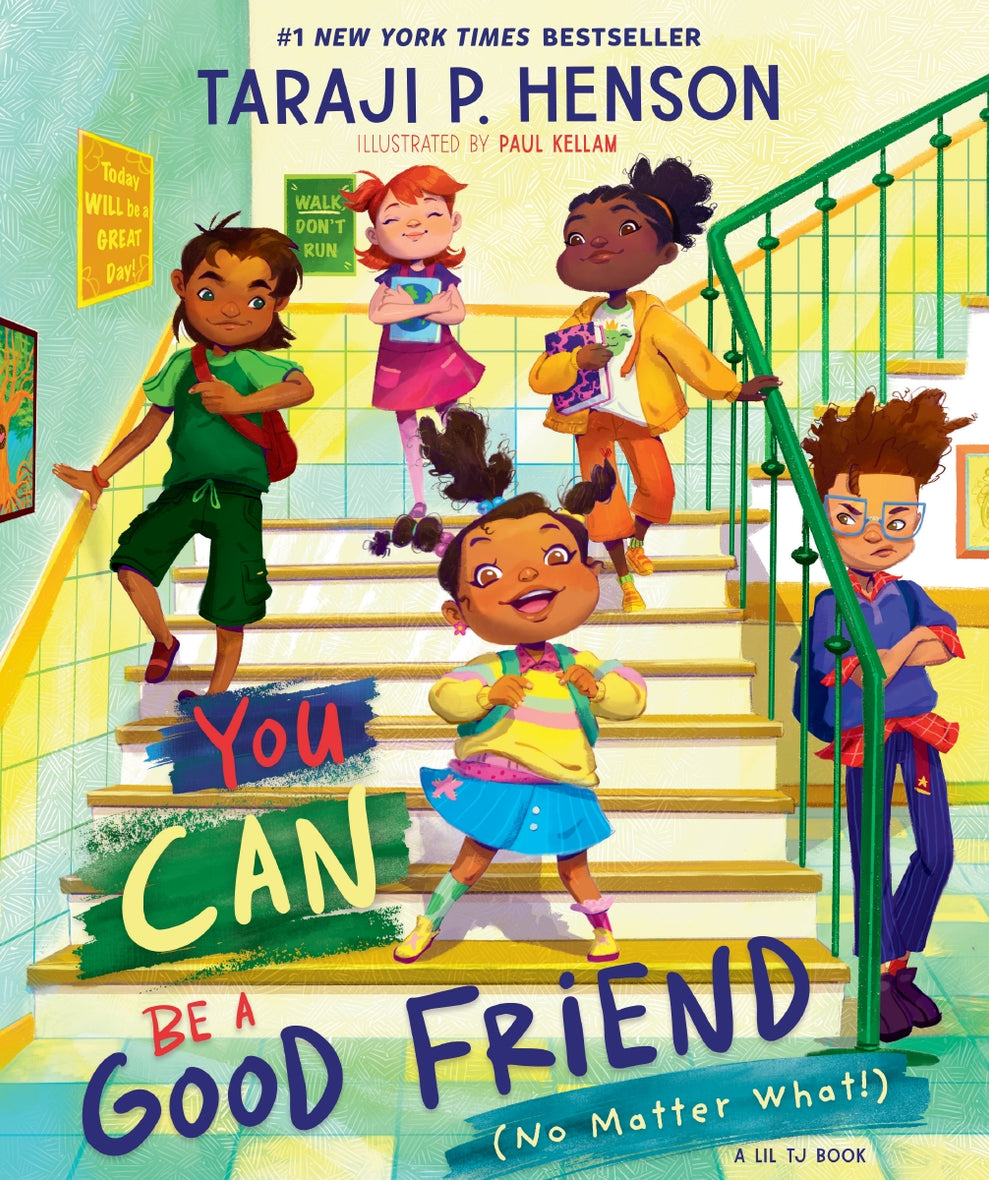
You Can Be a Good Friend (No Matter What!): A Lil TJ Book (56th NAACP –  ChurchSource

You Can Be A Good Friend (No Matter What!) A Lil TJ Book

Author : Taraji P. Henson

Illustrator : Paul Kellam

Link to Purchase :Knowledge Bookstore

Link to Teacher Resource : Teachers Pay Teachers Book Companion

Summary of Book

      The story starts with a young girl, TJ, getting ready for her first day of school, excited to make “millions of friends,” even though her grandmother and brother remind her it takes time. At recess, an older kid named Beau knocks her down, calls her tiny, and makes fun of her art and her tomato with peanut butter sandwich, leaving her sad and insecure. TJ begins bringing a normal PB&J, doing her hair like the other girls, and wearing plain clothes to not stand out. She grows more nervous until Beau yells at her again. She calls her grandma, who tells her “you get more flies with honey.” TJ decides to be herself again, wearing her favorite clothes and bringing her favorite sandwich. At school she finds the music room and starts playing the drums, and other kids join her. Beau tries to pretend he can play the violin but gets embarrassed, so TJ helps him. Beau apologizes, explains he was nervous, and all the kids, including TJ and Beau, become friends.

How it represents Element 2

     This story represents element 2, respecting others, because it teaches children to be kind, inclusive, and fair.  The story shows how listening, helping, and celebrating differences are key to building friendships and treating everyone with respect.  It gives insight into how people feel when you are being mean to them and not respecting them, like how TJ feels when Beau is bullying her.  While also showing that while Beau was mean to her, TJ did not need to be mean back and instead chose kindness, which also helped Beau open up.  

How I would use it in my future classroom 

     This is definitely a story I want to share to my future students, to spread its message.  I think I would want to read this story as a class during the first week of school, as just like TJ many of them will be feeling big nervous butterflies in their stomachs.  Not only does it touch on the nerves they feel before starting school, but also touches on respecting others, making friends, and bullying.  I find all of these to be important topics to share and touch on with your students, especially ages 5-10.  I think it could help students realize that being nervous is normal, how being mean/disrespectful can make other students feel, and how to treat friends.  


Coquí­ in the City


 Coqui in the City

Written and illustrated by Nomar Perez

Grade Level Prek-2nd

Element 2: Respect for Others

Purchase Here


Short Summary

The book tells the story of Miguel, a young boy who moves with his family from Puerto Rico to New York City. Miguel loves his life in Puerto Rico playing outside, eating mangos from the tree, dancing, and spending time with his grandparents and his little frog, Coqui. When his parents announce that they are moving to the U.S., Miguel feels sad to leave his grandparents and Coqui behind.

Before Miguel leaves, his grandfather gives him a baseball as a reminder that he’s never alone. In New York City, Miguel is amazed by the bright lights and tall buildings but misses his old home. As he explores the neighborhood with his mom, he discovers familiar sights and sounds that remind him of Puerto Rico. Little by little, Miguel begins to feel at home again.

This story captures the challenges of moving to a new country and shows the importance of family support and love during times of transition.

Element 2: Respect for Others

This story is an Element 2: Respect for Others book because many kids and families live the experience of moving from their country of origin to the USA, and this book gives the class an opportunity to discuss about those experiences and the changes they face. This book promotes respect towards others experiences and creates a secure environment for children to share about their stories and for others to listen and honor them. It encourages the values of empathy, family, community, inclusion, and diversity.  It also helps students reflect on how they can support their classmates and what “home” looks like for everyone I the class.

Classroom Activities

Activity one: I will begin with a whole class read-aloud of the book. Afterwards, students will be invited to share personal connections with the story, such as experiences moving to a new place or knowing someone who has gone through similar changes. They will aso express their feelings about the story and reflect on their own experiences. Next, students will complete a sequencing activity to arrange the main events of the story in the correct order and respond to the question: What would you say to Miguel when he moved to the USA?

Activity two:  After the read aloud, students will share what makes them feel at home at school. Based on this discussion, they will work in small groups to create a three-step plan to help classmates feel at home and develop a sense of belonging in the school.


More Class Lessons Ideas


Wednesday, October 1, 2025

Respecting Others Through Storytime

The Sandwich Swap: Queen Rania of Jordan Al Abdullah, Kelly DiPucchio,  Tricia Tusa: 9781423124849: Amazon.com: Books

 🌍 Respecting Others Through Story Time

The Sandwich Swap 

by Queen Rania Al Abdullah & Kelly DiPucchio

Social Justice Element: Element 2 - Respect for Others


💰WHERE TO BUY💰


Purchase The Sandwich Swap on Bookshop.org


Lily and Salma are best friends who share almost everything - except lunch. Lily eats peanut butter and jelly, while Salma eats hummus and pita. At first they make fun of each other's food, which hurts their feelings and even starts a food fight at school. But when they finally try each other's sandwiches, they realize that difference does not mean "bad." In the end, the whole class celebrates new tastes and friendships, learning that respecting differences can bring everyone closer together. 

📚TEACHER REVIEW📚

🌟CONNECTION TO SOCIAL JUSTICE ELEMENT 2 RESPECTING OTHERS

  • Shows how differences in culture and diversity (even something as small as lunch) can cause misunderstandings
  • Models empathy and open-mindedness: trying new things instead of judging them
  • Emphasizes that respect means accepting others without giving up your own identity

🍎CLASSROOM USE IDEAS - Suggested Grades: K-2

Lesson Plan: "My Plate, Your Plate"

  1. Read Aloud & Discuss
    1. Why did Lily think Salma's food was weird?
    2. How do you think Salma felt when her food was teased?
    3. What happened when they swapped sandwiches?
  2. Food Swap Activity
    1. Students bring (or draw ✎) a food special to their family/culture
    2. Share with classmates
  3. Venn Diagram Compare and Contrast
    1. Chart similarities and differences between food
    2. Show how both sides are valuable
  4. Writing/Drawing
    1. Draw or write about a time you tried something new. How did it make you feel?
  5. Respect Anchor Chart
    1. Work together to make a class poster with rules for respecting others:
      1. Be curious, not critical
      2. Celebrate differences
      3. Respect everyone's traditions

💡WHY THIS BOOK MATTERS📚

The Sandwich Swap is a simple yet powerful reminder that respect starts with small steps - like listening, learning, and being open to new experiences. In the classroom, it creates a safe space for conversations about empathy, culture, and kindness.

Last Stop on Market Street


                                                            Last Stop on Market Street
                                                            Written by Matt de la Peña
                                                            Illustrated by Christian Robinson
                                                            Where to Find Book


        Summary: 
Last Stop on Market Street follows a young boy named CJ who rides the bus across town with his grandmother. Along the way, CJ notices the differences between his life and the lives of the people he sees. He asks questions and sometimes wonders why his life isn’t more like others’. His grandmother helps him see the beauty in his community, the kindness in others, and the ways he can appreciate what he has. By the end of the ride, CJ learns to value his neighborhood and the unique experiences of people around him.

        Element 2: Respect for Others:

This book connects to Element 2 because it shows students the importance of noticing and valuing differences in people’s lives. CJ learns to see beauty and worth in every person, no matter their background, and to respect the diversity of experiences in his community. It encourages empathy, understanding, and appreciation for the ways in which everyone’s story is meaningful.

         Classroom Use (Pre-k to Grade 2):

  • Read the book aloud to the class and compare the diversity found in the book to the students' own community.

  • Comparing what CJ notices about differences versus what he learns to appreciate.

  • Ask students to reflect on a time they noticed something different in their community and how it made them feel.

  • Have students draw a picture of a moment when they appreciated someone different than them. 

Discuss ways students can respect and celebrate differences in their own school or neighborhood.

Additional Resources 

  • Other lessons related to the book

Strictly No Elephants

 Strictly No Elephants (The Pet Club Series): Mantchev, Lisa, Yoo, Taeeun:  9781481416474: Amazon.com: Books


Title- Strictly No Elephants 

Author- Lisa Mantchev

Illustrator- Taeeun Yoo

Grade Level- PK-3

Genre- Fiction

Link to Purchase- https://bookshop.org/p/books/strictly-no-elephants-lisa-mantchev/d27a38a3f9e0eede?ean=9781481416474&next=t

Link to teacher resource- https://www.themountainteacher.com/2024/01/the-best-strictly-no-elephants-activities/

https://www.prindleinstitute.org/books/strictly-no-elephants/

Social Justice Element-

Summary-

Strictly No elephants is a book about a young boy that has a pet elephant. He loves his pet just like any other child with a pet does. He brings his pet elephant to pet club day but there was a sign on the door saying "strictly no elephants". This made the boy very sad until he bumped into a girl with a pet skunk. Pet club day didn't let her in either because she also had a different pet. Throughout the book the boy mentions friendship many times, and how he helps out his pet elephant because "that is what friends do". The boy sparked an idea to start his own pet club. He found many friends with different pets and put a sign on the door saying "all are welcome". They now have their own pet club and any child can join with any kind of pet. 

Connection Element- 

This week's element is respect for others. This boy did not care what kind of pets all of his friends had , he welcomed any pet, of any size , or any kind. The boy and all his others friends respect each other and their pets. This book also connects to social justice because the boy stepped up and took charge to start something of his own because he believed should be welcome no matter what. 

Classroom- 

This book will be used in my future classroom. It can teach children about friendship, and also teach children that everyone should always be welcomed no matter what. Many different activities can be used with this book. Fun worksheets like key words, or book connections. A child can share with their teacher if they have ever felt like they could relate to this book, and can also share what they would do if they were in this young position. A fun interactive activity connected to this book could be to draw what pet they would have if they could have any pet in the world. 

Separate Is Never Equal


Title: Separate is Never Equal: Sylvia Mendez and Her Family’s Fight for Desegregation

Author: Duncan Tonatiuh 

Illustrator: Duncan Tonatiuh 

Grade Level: 3rd-5th 

Genre: Nonfiction 

Link to purchase: https://a.co/d/enjkMw2 

Link to teacher resource: https://www.learningtogive.org/resources/separate-never-equal-literature-guide 

https://teacherresourceroom.com/shop/shop-separate-never-equal-unit/

Social Justice Element 

Summary: 

This book talks about the story of Sylvia Mendez and her family fighting against separating people by race, religion, etc in the state of California. In 1940s schools were separated because of race and religion. As seen in the book white children would attended rich school while on the other hand Mexican children were pushed away to poor schools. Sylvia and her brothers try to enroll in a “whites only” school and they were turned always and told to sign up in a Mexican school where all of the other children go. This is when the Mendez family with other families decided to take some legal actions. They filed a lawsuit arguing that separation people just because of their skin color or race is going against something that was stated in the Constitution and harmful to the education of many Mexican American children's. During the time of the trial the teachers and experts gave proof about the harmful effects of separating kids on students self confidence and learning challenging due to the lack of education. The judge ended up in favor with the Mendez family declaring that separating these kids based on their family and cultural characteristics is illegal in California. This is a big important case for many schools because they can’t separate these kids anymore. This book showcases the courage and strong desire decision about something of the Mendez family and their community in fighting for equal rights and justice. 

Connects to Element: 

This books talks about a story how a community of kids don’t have the same opportunity as a white child does. Latin families have to fight for justice for their kids to have a better education. The struggle for equality in education during the desegregation is seen in this book and how the unequal treatment is showed. It shows the battle and victory within this family of social justice, they fought for what they believe and for justice for all the opportunities of the kids regardless of the background. 

Classroom use:

This books could have any activities, many do something with some vocabulary words. It could also be used for a research paper, to look into more about social justice in different states or schools. It could also be used for a reflection paper, answer to the question of what equal education means. Many questions could be asked within this book such as, what does it mean to fight for justice, what is segregation, what are petitions, why did the school reject these students, what risks were taken, have you ever felt excluded? 

Thursday, September 26, 2024

Malala’s Magic Pencil


Title: Malala’ Malala’s Magic Pencil s Magic Pencil

Author: Malala Yousafzai <--- Click here for malala.org!

Illustrator: Kerascoët

Genre: Auto-Biography 

Grade level: Grades 3 - 5

Summary: Malala’s Magic Pencil tells the story of young Malala Yousafzai, who dreams of having a magic pencil to solve problems and make the world a better place. She imagines using it to erase poverty and bring peace. As she grows up, she realizes there’s no magic pencil—but she can still create change with her voice. By speaking out for girls' education and human rights, Malala becomes a strong advocate for change. This beautifully illustrated book makes her story easy for younger readers to understand and shows how Malala held onto hope, even in tough times.

Element 6: Social Action: This book shows how anyone can take social action, like Malala did when she stopped dreaming of change and started working for it. It teaches kids that even young people can make a difference in their communities by speaking up for what’s right. Malala’s journey inspires students to recognize issues around them and to have the courage to act. It’s a reminder that change doesn’t come from magic but from determination and using your voice.

Activity/Action: I would use Malala’s Magic Pencil in a lesson about advocacy and social justice. After reading, students could think of problems in their school or community they care about. They would brainstorm ways to take action—like starting a campaign, writing letters, or planning events. This activity would encourage them to become advocates, much like Malala, by raising awareness and making a real effort to solve the problems they’re passionate about.

Malala’s bravery and dedication to education and equality set a powerful example of what it means to stand up for change. The story, paired with Kerascoët’s vivid illustrations, is relatable for young readers and offers a clear message about the importance of standing up for what’s right. It’s also a great way to start conversations about education and how students can make a difference in their own lives.

Additional recourses:


If You Were a Kid During the Civil Rights Movement


 Summary: This book is about imagining what it would be like to be a child during the civil rights in the 1960s. It follows the story of two main characters, Mark and Connie, as they navigate and fight for what freedom looks like for them.  Mark is a young person who just moved to the south from Washington DC where he went to an integrated school and is now adjusting to what it is like to be in a segregated school system in Oklahoma. Connie, a very curious and adventurous young person, overhears her brothers talking about going somewhere one day and is very intrigued about where they could be going or what they could be doing. The brothers had been denied service at the local ice cream shop and were a part of organizing a demonstration at the ice cream shop.  The story follows Mark and Connie’s curious it’s as they experience a demonstration, the police and racism up close.  While Mark and Connie are non-fictional characters on almost every page there is an info box that has a summary of a fictional event that happened during civil rights movement. Some of those events and artifacts include Little Rock nine, Ruby Bridges, the green book and the Montgomery bus boycott.


Element 4: This book is a great example of element four because it has young people as the main characters and looks at what social movements look like through a young person‘s perspective.  It brings young people to the forefront as the changemakers of a generation but it also shows the real vulnerability and fear that comes with protesting, boycotting and shifting society. It also shows the very real every day, fears and terrors of the civil rights for a young person in the book. It has a number of non-fictional events that affected young people. The story of Ruby Bridges, a six-year-old navigating the civil rights movement. The church bombing that killed four little girls is also mentioned, those girls were adolescent and teenagers. Another example is the Little Rock Nine that included nine students that went to attend an all white high school.


Activity: As an educator, I would use this book to talk about youth led movements, and the literary element of compare and contrast. As we look at venn diagram, similarities, and differences, we can make a venn diagram to talk about different movements and how they have been similar or different to one another. For example, we can talk about March for Our Lives and a youth led sit in during the civil rights movement.


To recap what we learned from multiple movements, each young person will make a zine with words and visuals based on what they learned about social movements and social change.


Resources:


https://www.zinnedproject.org/materials/the-young-crusaders/


https://www.blacklivesmatteratschool.com/curriculum.html


Book:


https://www.thriftbooks.com/w/if-you-were-a-kid-during-the-civil-rights-movement-if-you-were-a-kid_gwendolyn-hooks/14006497/item/36474722/?utm_source=google&utm_medium=cpc&utm_campaign=high_vol_backlist_standard_shopping_customer_aquistion&utm_adgroup=&utm_term=&utm_content=659174113139&gad_source=4&gbraid=0AAAAADwY45gfEs_qsX2hnlke1FKn9PPeZ&gclid=Cj0KCQjwjNS3BhChARIsAOxBM6rDs19phzfvkHx6v7COgm7H_9QOqpcVfsdEVrDkKvkSfYMhDTFKK_YaAkKnEALw_wcB#idiq=36474722&edition=13584415